3 Most Challenging Holes, Unique Things at Barefoot-Dye: Ask the Pros with Travis Dutcher & Rob Cressman
This edition of “Ask the Pro” offers another two-fer, with a pair of PGA professionals stepping up with thoughts on the most challenging holes and unique elements at The Dye Course at Barefoot Resort & Golf. For openers we hear from Travis Dutcher, PGA, Head Golf Professional at The Dye Course, who describes each of his picks for most challenging holes as follows:
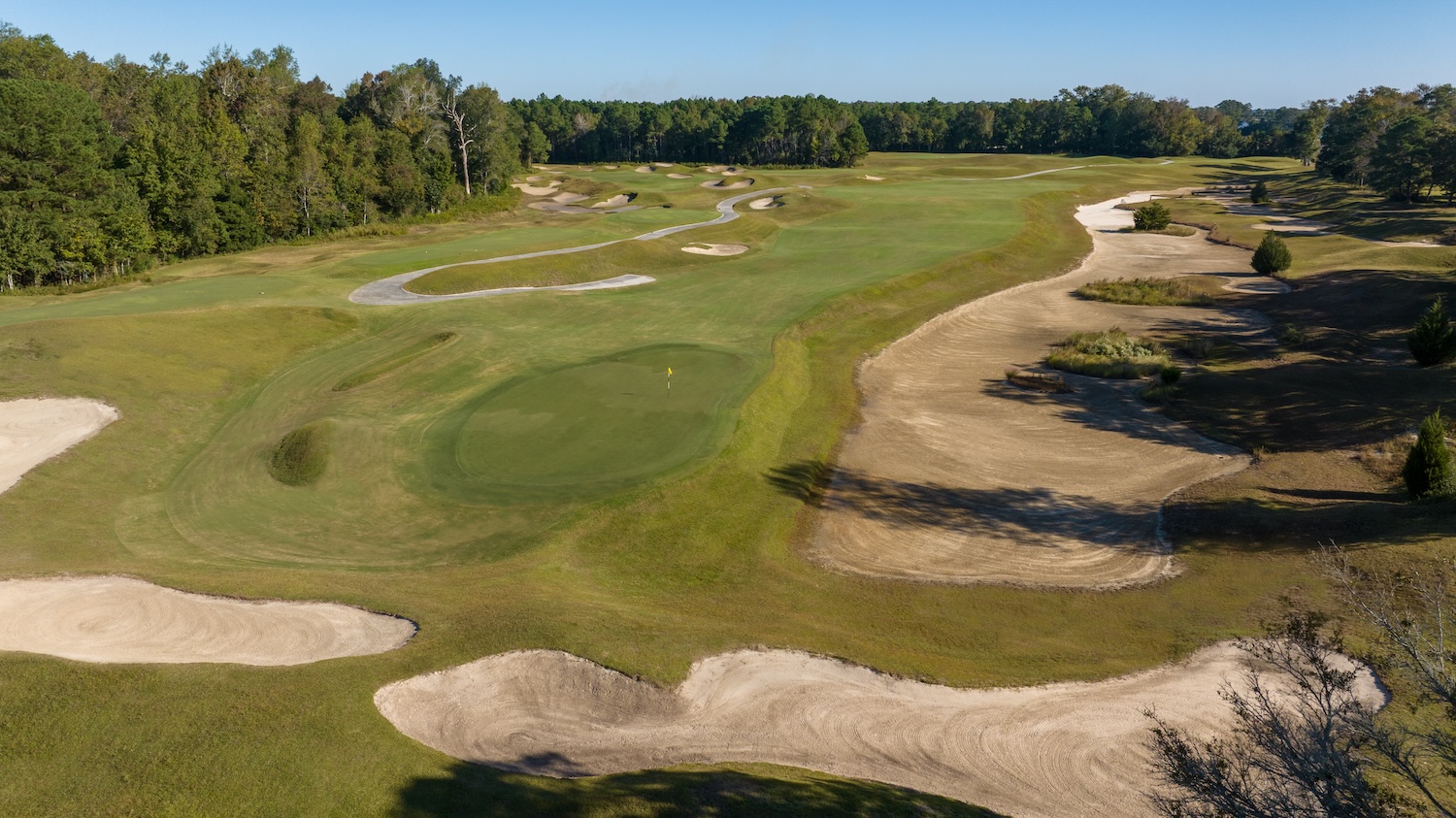
No. 14 – “This is a longer par 4 with waste area running along the entire left side,” he says. “The landing area for most golfers is wide but will still leave 180+ yards for the second shot. Longer hitters have a narrower landing area that is protected by a bunker on the right side. If you hit the narrow fairway the ball will roll out leaving a short iron in for the second shot. The green is big with quite a bit of undulation. However, this hole always seems to play into the wind, making this hole play much longer and tougher.”

No. 17 – “This is a tricky par 3. The green complex is what makes this hole difficult to hit. It’s very narrow front left and widens a little as you move back and to the right. There is not much room around the green to miss as it’s protected by penalty areas. This hole always plays at least a half club longer and is protected by trees, so you do not feel the wind.”

No. 18 – “This is one of the best finishing holes on the beach. A difficult dogleg left with water all along the left. It’s a very similar design to TPC Sawgrass No. 18. Like No. 14 this hole always plays into the wind so the added pressure of hitting the fairway increases. The second shot is also very intimidating with the water greenside left and the bailout to the right and wind into the players. It’s all very scenic, though, with the clubhouse in the background.”
For good measure, Dye Course First Assistant Golf Professional Rob Cressman III, PGA weighs in with his thoughts on the three things that make The Dye Course unique to the Myrtle Beach market:
Exclusive Semi-Private Membership Experience – “The Dye Course offers a private-club feel with resort amenities,” Cressman explains. “While Barefoot’s Norman, Fazio, and Love courses operate primarily as resort courses, The Dye Course offers a more exclusive, member-oriented experience while still allowing public and member play. This creates a private-club atmosphere that is not very common in the Myrtle Beach area.”
Authentic Pete Dye Architecture – “This Pete Dye design offers Myrtle Beach’s most distinctive strategic challenge. The course is widely regarded as the most challenging and visually dramatic of Barefoot’s four championship layouts. Golfers encounter classic Pete Dye elements including strategic angles/sightlines, deep bunkering, waste areas, native grasses, railroad ties, and risk-reward decisions throughout the round. Many Myrtle Beach courses are enjoyable resort layouts, but few offer the recognizable architectural identity associated with a Pete Dye design.”
Tournament-Proven Prestige – “This is home to celebrity and championship golf events. The Dye Course has hosted prominent events, including the famous Hootie & the Blowfish Monday After the Masters Celebrity Pro-Am and major amateur championships. Its reputation attracts PGA TOUR professionals, celebrities, and serious golfers, giving members access to a course with a tournament-caliber profile that stands out in a highly competitive golf destination. The course has hosted qualifying events for what was formerly PGA TOUR Canada (now part of PGA TOUR Americas), putting aspiring tour professionals on the same fairways as Dye Course members and guests. The PGA TOUR Americas pathway is one of the primary routes players use to advance toward the PGA TOUR and the Korn Ferry Tour.”