Ask the Pro: The 3 Most Challenging Holes at Wachesaw East Golf Club
With the question put to Mike DeLuca, PGA, General Manager at Wachesaw East Golf Club, he didn’t hesitate to identify a specific stretch of holes on this Clyde Johnston signature design that has hosted multiple LPGA Tour events. In his mind, the finishing stretch of holes 16, 17 and 18 stands out above all others on the difficulty meter, one DeLuca cites as “one of the most challenging and memorable conclusions (to a golf round) along the Grand Strand.”
He offered more context on each hole as follows:
Hole 16 (#6 handicap) – Marked by a tee shot that needs to find a narrow, undulating fairway, relief can come at times from a prevailing wind that can help shorten this hole. Nevertheless, DeLuca says that “Hole 16 demands precision from tee to green, with strategically placed hazards and a difficult approach that rewards accuracy and smart course management.”

Hole 17 (#4 handicap) – With a first shot on this par 5 that should favor the right center of the fairway to give you a chance to reach the green in two, you still have a challenge if you decide to lay up as a lake guards the fairway’s right side on the approach. “The 17th is a true risk-versus-reward hole, and one of the course’s signature challenges,” DeLuca explains. “It offers longer hitters an opportunity to reach in two while water, bunkering, and a demanding green complex can punish overly aggressive play.”
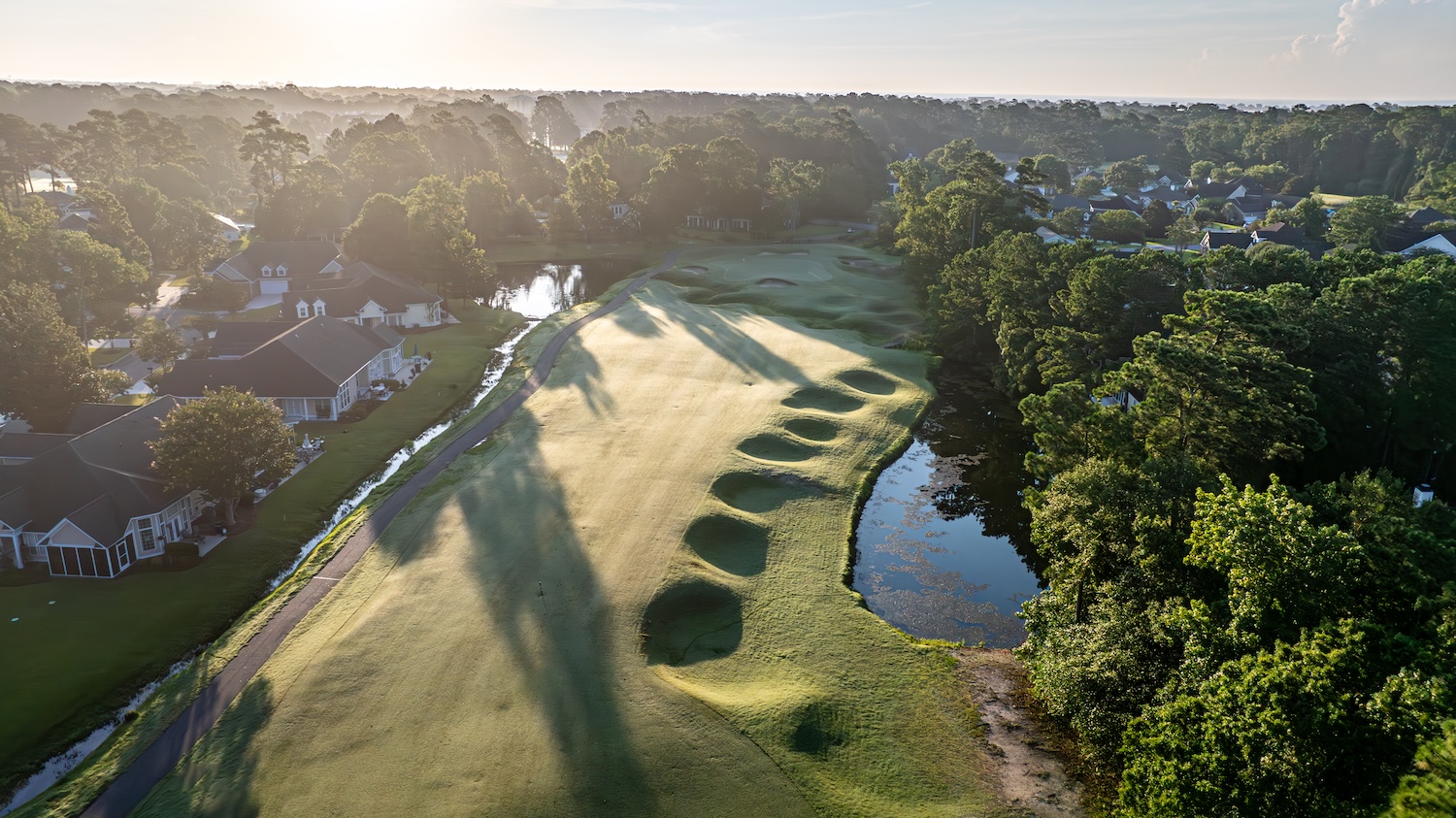
Hole 18 (#2 handicap) – The closing 18th hole delivers a dramatic finish, requiring both distance and control off the tee before what DeLuca describes as “a pressure-filled approach into a well-guarded green.” Golfers are advised to play that approach to the right center of that putting surface.

As DeLuca sums up, “Together, holes 16 through 18 showcase the unique character of Wachesaw East — blending Scottish-inspired design, strategic shot-making, and the natural beauty of the South Carolina Lowcountry into a memorable finishing stretch for golfers of every skill level.”