Rees Jones and Myrtle Beach Golf: The “Open Doctor’s” Grand Strand Legacy
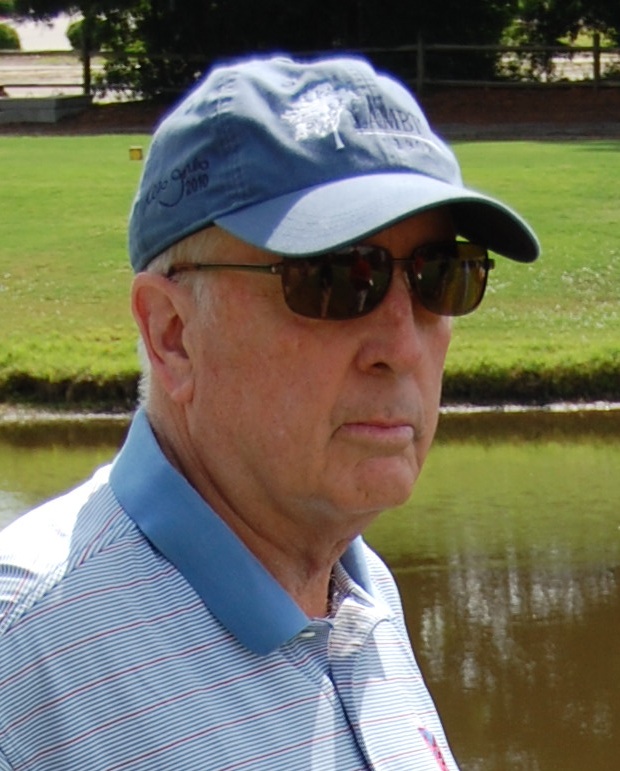 Rees Jones — known throughout the golf world as “The Open Doctor” for his renovation work on U.S. Open venues — has one of the deepest connections to Myrtle Beach golf of any architect alive. From his very first solo design to a North Strand classic that bears his name, Jones helped shape the Grand Strand into the status it now enjoys as The Golf Capital of the World®.
A Family Legacy Rooted in the Grand Strand
Rees Jones didn’t discover Myrtle Beach — he inherited it. His father, Robert Trent Jones Sr., designed The Dunes Golf & Beach Club in the late 1940s using the same shaper as Augusta National, which is why the two courses share so many architectural signatures. When Rees set out on his own, Myrtle Beach is where he took his first and most important step.
Arcadian Shores: Where Rees Jones Began
Arcadian Shores Golf Club, which opened in 1974, was Rees Jones’ very first solo design — a fact that doesn’t get nearly enough attention. Before the U.S. Opens, the Ryder Cup venues, and a portfolio exceeding 200 courses, there was Arcadian Shores.

The course is a traditional layout in every sense: tree-lined fairways, 64 bunkers, water in play on 14 holes, and seven forced carries that reward smart shot-making. At its peak it earned a ranking of No. 51 on Golf Digest’s list of America’s 100 Greatest Public Courses — national confirmation of what savvy Myrtle Beach golfers have always known. Playing between 5,113 and 6,857 yards across five tee options, it accommodates a wide range of handicaps, and two of its holes were selected for the Myrtle Beach Sun News’ Dream 18.
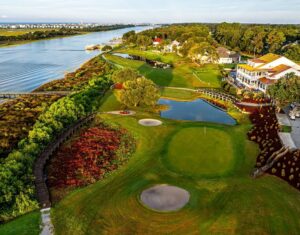
The par-3 second — a 201-yard carry over water with no real bailout — sets the tone early. The par-4 13th is the signature: just 367 yards from the white tees, but a deceptively strategic hole where a longer drive creates an awkward downhill approach over water. In spring, azaleas blooming behind the green make it one of the most photographed holes on the Grand Strand.
A major renovation brought the course back to peak form with Ultradwarf Bermuda greens, repaved cart paths, new bunker sand, and a new clubhouse overlooking the 18th. By all accounts, Arcadian Shores is now playing the best golf of its 50-year life.
The Jones Course at Sea Trail: A North Strand Standout
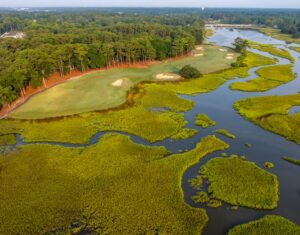
The Rees Jones Course at Sea Trail Resort, situated along the North Strand in Sunset Beach, North Carolina, opened in 1989 and has been a favorite of well-traveled Grand Strand golfers ever since. Player-friendly off the tee, it plays harder than it looks at 6,761 yards, with six par 4s measuring 400-plus yards and elevated greens that demand an extra club on approach.
The signature par-3 fifth — a 178-yard carry over water from an elevated tee — is the kind of hole that sticks with you. Jones has designed or renovated 27 courses that hosted major championships or international team events. That pedigree shows up in every corner of this layout.
Two Courses, One Legacy
Arcadian Shores and the Jones Course at Sea Trail are built around the same philosophy: challenge without humiliation, creativity rewarded, and a round you’ll want to repeat. For any Myrtle Beach golf trip, both courses belong in the conversation. Arcadian Shores is where a legendary career began. The Jones Course at Sea Trail is where that career’s full potential is on display. Together, they tell the story of an architect who didn’t just visit the Grand Strand — he grew up alongside it.