6 Things You May Not Know About Barefoot Resort & Golf (But Should)
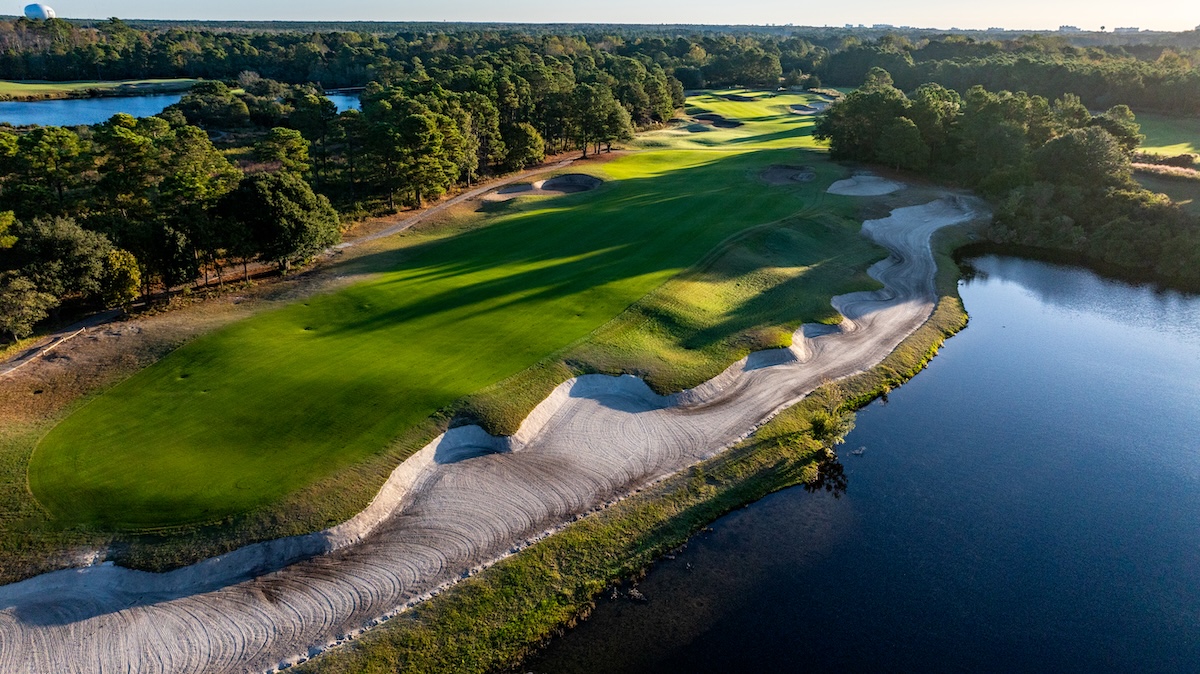
Four courses. Four legends. One day. And a pontoon boat nobody talks about.
Barefoot Resort & Golf in North Myrtle Beach is one of the most recognizable names in Grand Strand golf. Four championship courses, four prominent designers, a resort address on the Intracoastal Waterway — most golfers know the broad strokes. What they don’t know is the stuff that makes this place genuinely fascinating. Here’s what the scorecard doesn’t tell you.
It Made History the Day It Opened
On April 13, 2000, Barefoot Resort became the first property in American golf history to open four championship courses on the same day. Not the same season — the same day. The Dye Course, Fazio Course, Love Course, and Norman Course all debuted simultaneously, which had simply never been done before in the United States.
The architects behind those four courses weren’t a collection of regional designers filling out a roster. Pete Dye. Tom Fazio. Davis Love III. Greg Norman. It’s the closest thing golf course architecture has ever produced to an All-Star Game, and every one of them was competing — quietly, professionally — to design the best course on the property.
The Dye Course Has a Charity Secret
The Dye Course is the bruiser of the bunch — 7,343 yards, Dye’s signature railroad ties everywhere you look, waste bunkers built to swallow golf balls and self-esteem. It’s the longest and most demanding of the four, which makes it an interesting choice for what happens the Monday after every Masters Tournament.
Since April 2002, the Dye Course has hosted the Monday After the Masters Celebrity Pro-Am, the largest single-day charity golf tournament in the state of South Carolina. The event combines golf, live music, and fundraising in a format that has generated millions of dollars for children’s educational programs and South Carolina junior golf programs. Most golfers who come to Barefoot to challenge themselves on the Dye Course have no idea they’re playing the same turf that hosts one of the state’s most significant charitable events every spring.
The Fazio Course Spent a Week on National Television
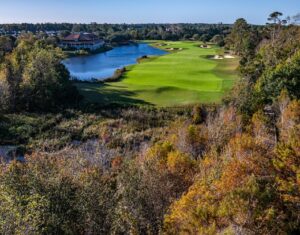
Tom Fazio’s entry at Barefoot is regarded by many as the most visually dramatic of the four — water on 15 of 18 holes, which is an almost absurd statistic. In 2014, it also became a television set.
Golf Channel’s Big Break: Myrtle Beach series chose Barefoot Resort for Season 22, and the Fazio Course hosted the championship match — 18 holes of head-to-head golf between two aspiring tour players with $75,000 and a spot in a tour event on the line. Jimmy Brandt won 3-and-1 over Toph Peterson. The Fazio Course’s combination of visual drama and strategic complexity made it the natural choice for the finale. It remains, for anyone who watched that season, the most famous version of the course.
Davis Love III Built His Course Around a Ruin That Isn’t Real
The Love Course is consistently the most beloved of Barefoot’s four layouts — wide fairways, Lowcountry warmth, inspiration drawn from Pinehurst No. 2’s famous green complexes. But the signature feature of the course is something Love himself didn’t invent.
The faux ruins of an old plantation home, set on a small rise between holes 4 and 6, were the idea of landscape architect Paul Cowley — not Love. Cowley pitched the concept, Love’s team ran with it, and what resulted is one of the most distinctive aesthetic moments in Grand Strand golf: a round that briefly feels like it’s passing through history. The ruins aren’t real. The effect they create absolutely is.
Love, a proud Carolina native, has described the course as one of his most gratifying design projects. His goal was simple: be different from the three Hall of Famers building courses 200 yards away. On that count, he succeeded.
Greg Norman Designed the Grass, Not Just the Course
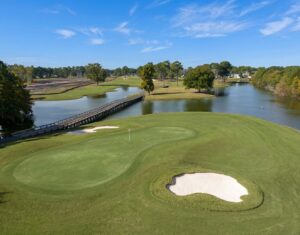
The Norman Course is the most accessible of Barefoot’s four layouts — seven holes running along the Intracoastal Waterway, open fairways, generous landing areas, waste areas that echo the feel of a desert layout. What most golfers don’t know is that Norman’s involvement went beyond the routing plan.
The tees and fairways at the Norman Course are planted with GN-1 hybrid turf, a grass variety developed by Greg Norman’s own turf company — Norman Turf. The course literally grows on grass that Norman helped engineer, which is either a sign of remarkable commitment to branding or genuine pride in the finished product. Possibly both.
The Early Days Involved a Pontoon Boat
In the resort’s early years, golfers arriving at Barefoot Landing — home to Greg Norman’s Australian Grille — could catch a pontoon boat that ferried them directly to the Dye Estates dock, bypassing road traffic entirely. It was a charming, logistically creative solution that also produced some memorable moments: radios for communication between docks occasionally ended up in the Intracoastal Waterway. Golf clubs followed, at least once. The boat service eventually gave way to more conventional transportation, but for a few years, getting to your tee time required something closer to a harbor cruise.
Barefoot Resort & Golf is one of those places that rewards the golfer who pays attention. The four courses are excellent in ways most people recognize. The details behind them are excellent in ways most people don’t know — and now you do.